
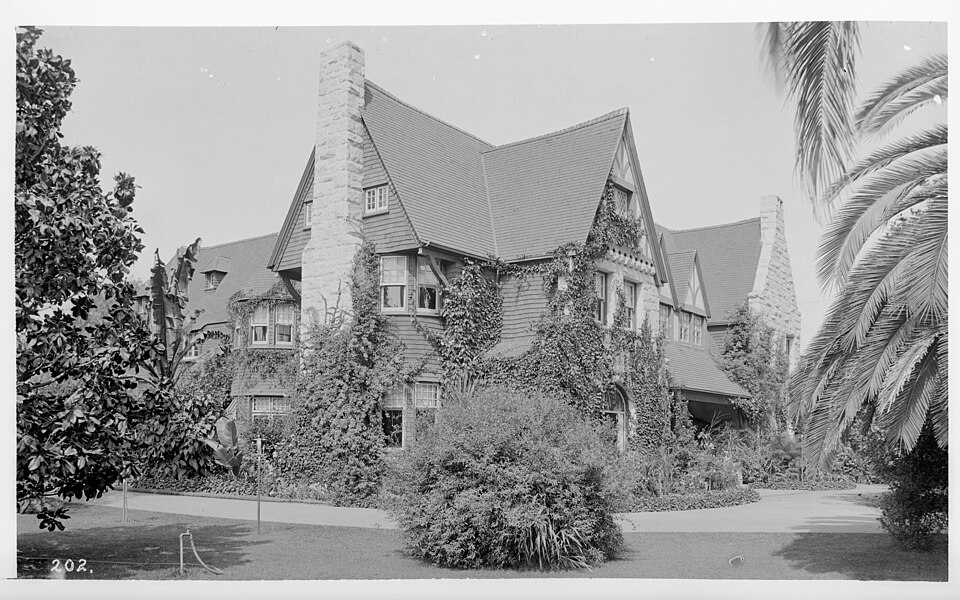
West Adams has some of the most beautiful historic homes in Los Angeles, but its architecture is only part of the story.
The neighborhood has been reinvented more than once. It began as one of Los Angeles’ earliest prestigious residential districts, became a center of Black wealth and culture, was divided by freeway construction and endured decades of disinvestment. Today, restored homes, new restaurants and large developments are drawing attention back to the area.
The question is not whether West Adams is coming back. In many ways, it already has. The more important question is who will benefit from that comeback.
That tension is what makes West Adams so fascinating to me. It is not simply a neighborhood where old houses became valuable again. It is a place where real estate, race, infrastructure and political power have been colliding for more than a century.
West Adams Is Bigger Than One Neighborhood
Before getting into its history, it is important to understand that “West Adams” does not refer to one perfectly defined subdivision.
Historic West Adams is a broad collection of neighborhoods and districts generally extending west from the area near USC toward West Boulevard. It includes places such as Adams-Normandie, Harvard Heights, West Adams Terrace, Western Heights, Jefferson Park and portions of what became known as Sugar Hill. Some of these areas have their own identities and Historic Preservation Overlay Zones, commonly called HPOZs.
That distinction matters in real estate. Two homes marketed as being in West Adams may fall under different planning rules, have completely different architectural character and sit several miles apart. Buyers should never assume that every property described as “West Adams” offers the same experience.
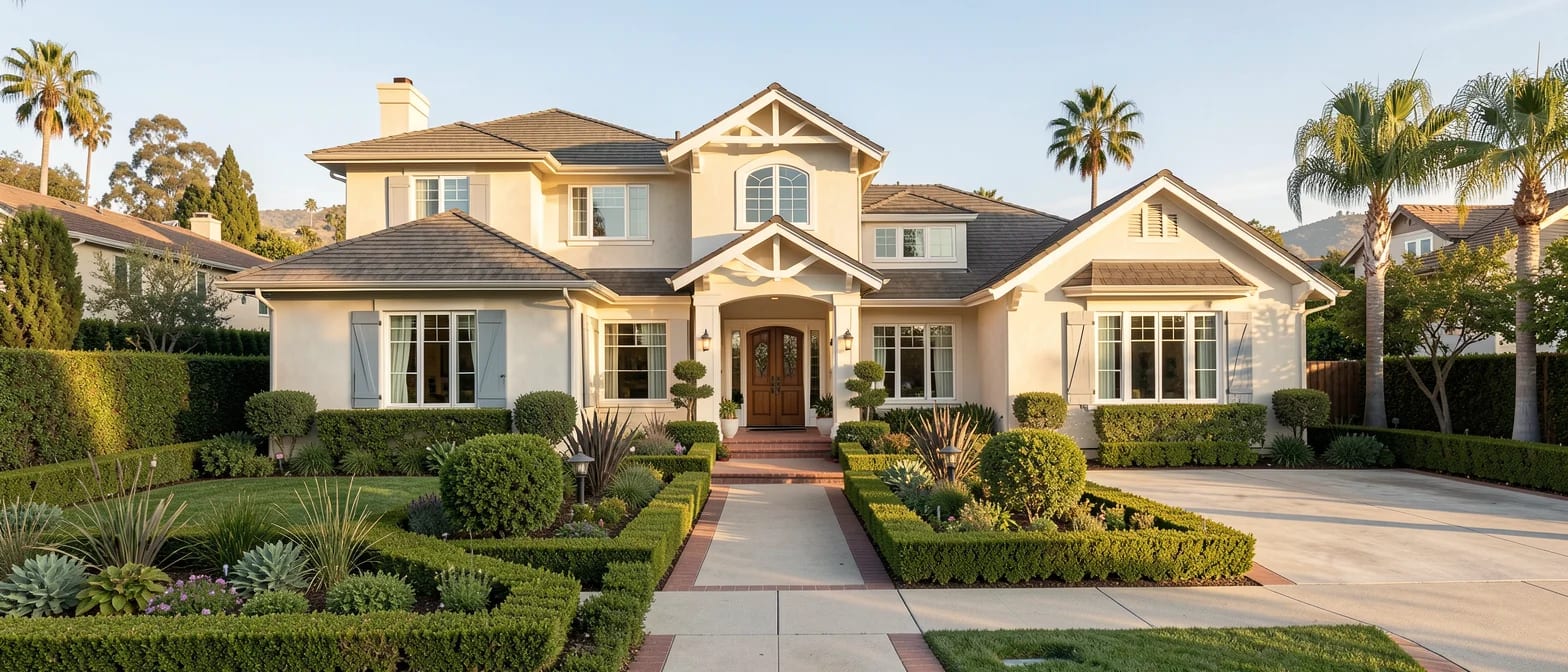
What connects these districts is their history. They contain one of Los Angeles’ greatest concentrations of late 19th and early 20th-century residential architecture, from Victorian cottages and Craftsman homes to Beaux-Arts, Colonial Revival and Spanish Revival mansions.
Los Angeles’ Original Prestige Address
At the end of the 1800s, Los Angeles was transforming from a relatively small agricultural city into a major American metropolis. Wealthy business owners wanted larger homes, quieter streets and distance from the increasingly commercial downtown core, but they still needed to remain close enough to conduct business there.
West Adams offered exactly that.
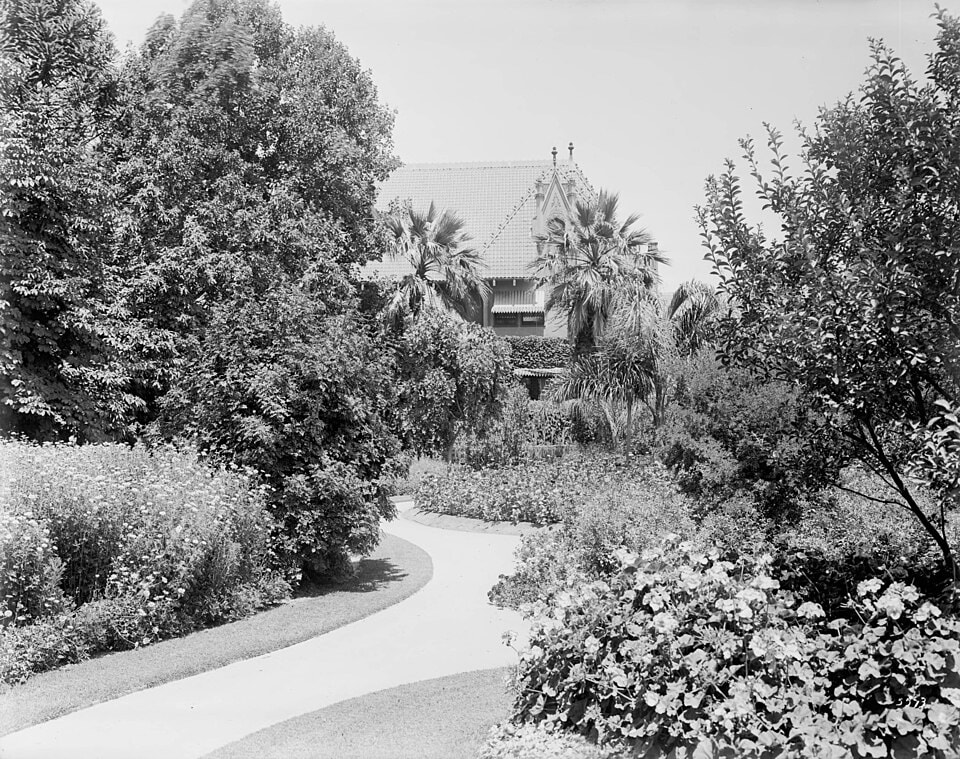
The area became one of the city’s most fashionable addresses. Railroad executives, bankers, oil investors and other members of Los Angeles’ early elite built substantial residences along Adams Boulevard and the surrounding streets. The Adams-Normandie area was described by the city as one of Los Angeles’ most prestigious communities at the turn of the 20th century.
This was suburban living before Beverly Hills, Bel Air or much of the modern Westside had developed into what we recognize today. The homes were constructed to announce status, but many also reflected the extraordinary level of craftsmanship available during the period.
You see it in the woodwork, leaded-glass windows, built-in cabinetry, broad front porches and formal entry halls. Even some of the more modest properties have a sense of permanence that is difficult and extremely expensive to reproduce today.
That is one reason West Adams has become so appealing to buyers. In many parts of Los Angeles, buying a house with this much architectural character would require entering a significantly more expensive market. West Adams still offers properties that feel connected to the city’s earliest era of residential grandeur.
How Black Angelenos Remade West Adams
As Beverly Hills, Hancock Park and Bel Air grew during the 1920s and 1930s, many wealthy white residents moved west. But their departure did not automatically make West Adams open and accessible.
Racially restrictive covenants were used throughout Los Angeles to prevent Black families and other minorities from buying or occupying homes in certain neighborhoods. Black buyers who moved into West Adams did not simply wait for those restrictions to disappear. They purchased properties in defiance of them and then defended their right to remain through the courts.
Norman O. Houston, president of Golden State Mutual Life Insurance Company, purchased a home at 2211 South Hobart Boulevard in 1938. His move helped begin the transformation of West Adams Heights into an affluent Black enclave that became known as Sugar Hill. White property owners responded with legal action in an attempt to enforce racial restrictions.
Other prominent Black Angelenos followed. Hattie McDaniel, who became the first African American to win an Academy Award, lived at 2203 South Harvard Boulevard. Performers Louise Beavers and Ethel Waters, physicians, business owners and other leading members of Los Angeles’ Black community also made their homes in the area.
This was about more than living in an impressive house. Homeownership gave Black families access to equity, stability and a foothold in a city that had systematically excluded them from many of its most desirable neighborhoods.
In 1945, white homeowners again sued Black residents, including Hattie McDaniel, in an effort to remove them. Attorney Loren Miller successfully defended the homeowners. Three years later, the United States Supreme Court ruled in Shelley v. Kraemer that courts could not enforce racially restrictive covenants.
West Adams therefore occupies an important place in the history of housing rights. The residents did not merely enter a wealthy neighborhood. They challenged the legal machinery that had attempted to keep them out.
A Center of Black Achievement
The growth of the Black community in West Adams produced one of the most important concentrations of Black wealth, culture and professional achievement in the western United States.
The neighborhood became home to doctors, attorneys, entertainers, insurance executives and civil-rights leaders. Golden State Mutual grew into one of the country’s most significant Black-owned businesses. Hattie McDaniel’s house became a symbol of both Hollywood achievement and the continuing fight against housing discrimination.
Ray Charles added another layer to this history when he built his own office and recording complex at 2107 West Washington Boulevard. Completed in the mid-1960s, RPM International included office space and a studio designed around Charles’ creative and technical needs. The property later became the home of the Ray Charles Foundation and the Ray Charles Memorial Library and is designated as a Los Angeles Historic-Cultural Monument.
These buildings show why preserving West Adams is about more than saving attractive façades. The houses, studios and institutions tell the story of people who created their own centers of influence when much of Los Angeles was closed to them.
What the Freeway Destroyed
The most destructive chapter in the history of West Adams arrived with the construction of the Santa Monica Freeway.
Beginning in the early 1960s, the freeway was routed through the heart of the broader West Adams community. Homes were taken through eminent domain and demolished. Streets were severed from one another, and portions of West Adams Heights, Sugar Hill and Berkeley Square were destroyed or divided.
It would be too broad to say that the freeway destroyed all of West Adams. Much of the larger historic district remains standing. But it did destroy a substantial part of the prosperous Black community that had formed there and disrupted the social and economic connections that help a neighborhood thrive.
A freeway is not simply concrete placed through a map. It determines which homes survive, which businesses keep their customers, which children can safely walk through their neighborhood and which communities remain connected. While managing transit lines cuts across multiple sections of the basin—similar to the transit grid changes shifting density expectations in our guide to living in Downtown Los Angeles—the legacy of the Santa Monica Freeway remains uniquely visible here.
West Adams did not decline because its architecture suddenly lost value. It was physically cut apart, while investment and attention moved elsewhere.
That history should also make us skeptical whenever infrastructure projects are discussed as though they are neutral. Decisions about where a freeway, rail line or redevelopment project is placed inevitably create winners and losers.
Preservation and the New West Adams
By the late 20th century, homeowners and preservationists were drawing renewed attention to West Adams’ surviving architecture. Several districts were eventually protected through HPOZ designations, including Adams-Normandie and West Adams Terrace. These protections are intended to preserve the visible historic character of contributing properties and streets.
The preservation movement helped prevent more historic houses from being demolished or stripped of their defining features. It also helped make the area attractive to a new generation of buyers who wanted original architecture and a central location.
More recently, that restoration has been joined by significant commercial and residential development. Cumulus District brought high-rise and mid-rise apartments, retail and a public park to the area around La Cienega and Jefferson. In February 2026, CIM Group announced the completion of The Read, a new 75-unit apartment building with ground-floor retail on West Adams Boulevard.
This investment brings real advantages. New businesses, restored buildings, safer commercial corridors and additional housing can improve daily life for residents. Neighborhoods should not be expected to remain frozen in time simply to prove that they are authentic.
But there is a difference between revitalizing a neighborhood and replacing the people who sustained it.
The Real Meaning of a Comeback
Gentrification is often discussed as though improvement and displacement are the same thing. They are not.
A neighborhood can receive new investment without losing its identity, but that outcome does not happen automatically. Rising property values may create generational wealth for longtime homeowners. The same price increases can force out renters, small businesses and families who cannot absorb higher housing costs.
My concern is not that people are restoring homes or opening businesses in West Adams. Those can be positive developments. My concern is whether the neighborhood’s Black history becomes nothing more than a marketing theme after the families and institutions responsible for that history can no longer afford to participate in its future.
A successful comeback should mean more than higher sales prices. It should include longtime owners benefiting from the equity they built, historic properties remaining intact, local businesses gaining customers and renters having some path to remain in the community.
The goal should not be to keep West Adams exactly as it was in 1905, 1945 or 1985. That would be impossible. The goal should be to allow the neighborhood to evolve without pretending that its past is separate from its real estate value.
The history is part of the value.
What Buyers Should Know About West Adams Historic Homes
For buyers, a historic West Adams home can offer craftsmanship, scale and character that are increasingly rare in Los Angeles. It can also come with responsibilities that do not apply to a newer house.
First, determine whether the property is inside an HPOZ and whether it is considered a contributing structure. Exterior work visible from the street may require review under the applicable preservation plan. Replacing windows, altering a porch, changing exterior materials or building an addition may not be as straightforward as it would be outside a preservation district. Balancing precise design covenants against localized parameters follows a similar layer of diligence to what we analyze when looking at the steps to buy land in Malibu.
Second, inspect the systems rather than being distracted by the details. Original woodwork can be beautiful, but buyers also need to understand the condition of the foundation, electrical wiring, plumbing, roof and sewer line.
Finally, evaluate West Adams block by block. One street may contain grand two-story residences, while another is defined by smaller Craftsman bungalows or denser multifamily properties. Freeway proximity, historic protections, commercial development and neighborhood boundaries can materially affect both the living experience and long-term value. Like the micro-location differences highlighted when analyzing properties near the beach in our overview of living in Venice Beach, block choice determines everything here.
West Adams is not valuable because it recently became fashionable. It is valuable because more people are finally recognizing what was there all along: exceptional architecture, a central location and one of the most significant cultural histories of any residential community in Los Angeles. For continuous data updates across all core submarkets, feel free to monitor patterns on our primary Los Angeles Real Estate Blog hub.
The challenge now is making sure the people who protected that legacy are included in what comes next.
If you are considering buying or selling a historic home in West Adams, or anywhere else in Los Angeles, learn more about my practice or contact me, Tyler Neale directly. I can help you evaluate the property, understand the neighborhood and make a decision based on more than square footage and recent comparable sales.