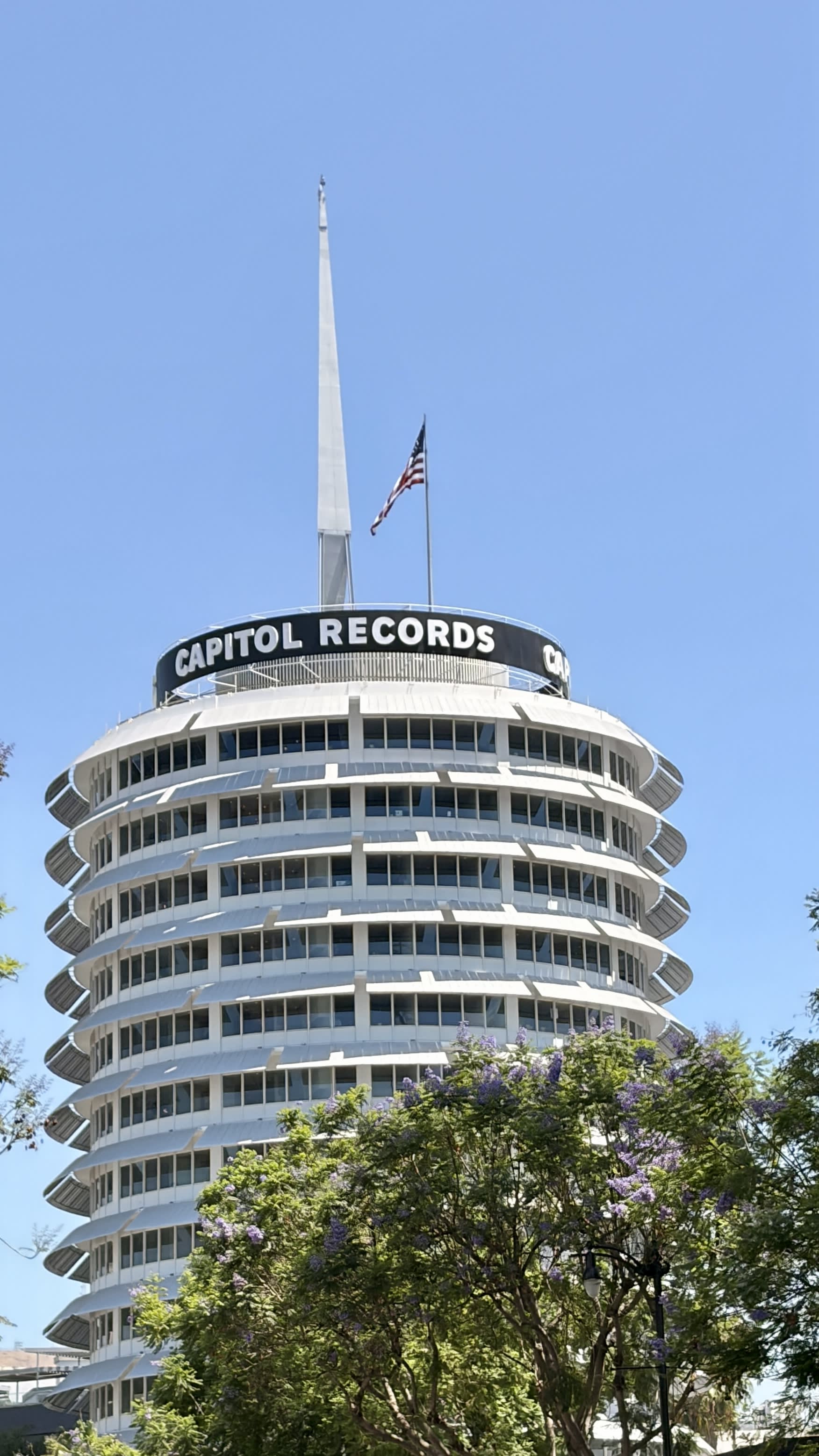

At 1750 Vine Street, just north of Hollywood Boulevard, stands one of Los Angeles' most recognizable architectural landmarks: the Capitol Records Tower.
With its 13 circular floors, wraparound sunshades, and towering rooftop spire, the building looks remarkably like a stack of vinyl records on a turntable.
But here's the surprising part: it was never designed to look like a stack of records.
That's the fascinating architectural coincidence I explore in my Capitol Records Instagram reel, where I uncover how a practical office design became one of Hollywood's most famous landmarks.
The Capitol Records Tower, completed in 1956, is one of Hollywood's most recognizable examples of mid-century modern architecture.
The Birth of a Hollywood Landmark
The Capitol Records Tower was completed in April 1956, becoming the world's first circular office tower.
The building was designed by Welton Becket & Associates, with a young architect named Louis Naidorf serving as its principal designer. Naidorf was only 24 years old when he developed the groundbreaking circular concept.
Capitol Records itself had been founded in 1942 by songwriter Johnny Mercer, music retailer Glenn Wallichs, and film executive Buddy DeSylva. By the mid-1950s, the record label had grown into a major force in the American music industry and needed a new headquarters.
What emerged was a 13-story building that would permanently change the Hollywood skyline.
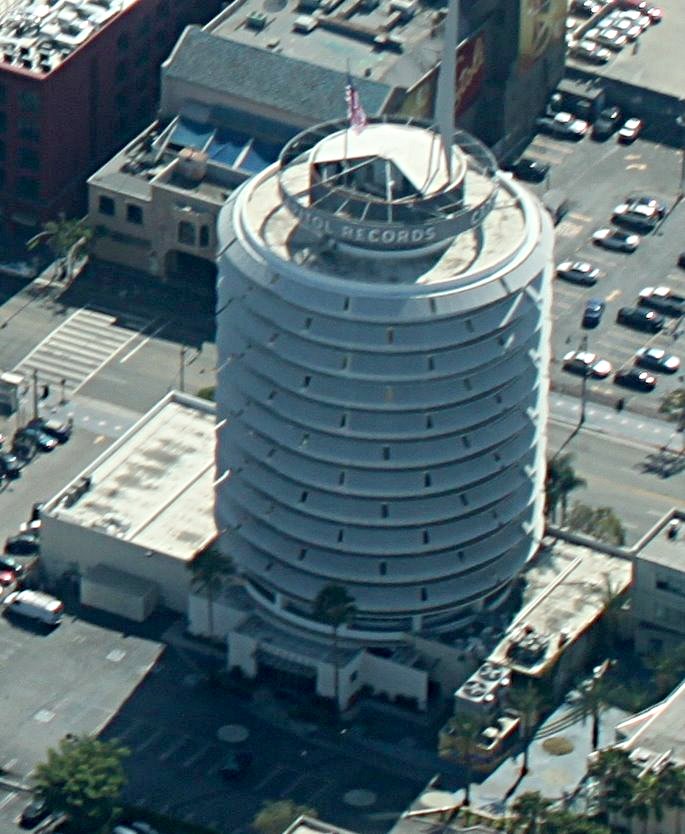
An aerial view highlights the unusual circular footprint of the Capitol Records Building and its location near Hollywood and Vine.
The Incredible Coincidence Behind Its Design
As I explain in my video, the story of Capitol Records' architecture is more surprising than its famous appearance suggests.
When Welton Becket assigned Louis Naidorf the project, the young architect wasn't even told that Capitol Records was the client.
His assignment was simply to design a 13-story office building that maximized usable space while minimizing construction and cooling costs.
Naidorf proposed a circular building because it required less exterior wall area than a comparable rectangular structure. That meant lower construction costs, reduced heat gain, and more efficient air conditioning.
The horizontal sunshades wrapping around each floor further protected the offices from direct sunlight.
But when Capitol Records co-founder Glenn Wallichs saw the design, he reportedly rejected it.
He thought the round tower looked too much like a stack of records and worried people would see it as a cheap publicity stunt.
A traditional rectangular design was subsequently prepared. However, after reviewing the alternatives, the company's financial backers favored the circular building for its efficiency and commercial potential.
Wallichs eventually approved the original design.
The building that looked like a stack of records was almost rejected for looking too much like a stack of records.
The tower's circular floors and dramatic rooftop spire created an unmistakable silhouette on the Hollywood skyline.
The Famous Rooftop Spire and Its Hidden Message
The building's resemblance to a record player became even stronger with the addition of its tall rooftop spire.
The spire originated from plans for an antenna associated with a proposed Capitol radio station that never materialized.
Together, the circular floors and spire created the appearance of stacked vinyl records and a phonograph needle.
But the spire contains another fascinating detail.
At its tip, a red aviation beacon flashes the word HOLLYWOOD in Morse code.
The beacon has been associated with the building since its 1956 opening, adding another unusual piece of Hollywood history to its distinctive design.
The Legendary Recording Studios Beneath the Tower
While the building became famous for its exterior, some of its most important history happened underground.
Beneath the tower are Capitol Studios, a series of recording facilities designed for exceptionally high-quality sound.
The studios included sophisticated acoustic engineering and underground reverberation chambers developed with assistance from legendary guitarist and recording innovator Les Paul.
Frank Sinatra participated in the studios' first recording session in April 1956, conducting Nelson Riddle's orchestra for Frank Sinatra Conducts Tone Poems of Color.
Over the decades, artists including Nat King Cole, Peggy Lee, Dean Martin, The Beach Boys, and The Beatles recorded at Capitol Studios.
The building became much more than a corporate headquarters. It was one of the most important recording destinations in the music industry.
The Capitol Records Tower remains a defining landmark in Hollywood, with its historic recording studios located beneath the building.
A Protected Piece of Los Angeles History
In 2006, the Capitol Records Building and its rooftop signage were designated Los Angeles Historic-Cultural Monument No. 857.
The designation recognized the tower's architectural significance, its connection to the entertainment industry, and its place in the development of modern Los Angeles.
Its location near Hollywood and Vine also makes it part of one of the city's most historically significant entertainment districts.
Seventy years after its completion, the building remains an enduring symbol of Hollywood's relationship with architecture, music, and popular culture.
Why Capitol Records Still Matters
What makes the Capitol Records Tower so extraordinary isn't simply its unusual design.
It's the fact that one of Hollywood's most recognizable buildings became famous for something its architect never intended.
A circular floor plan chosen for efficiency became a stack of records. An architectural spire became a phonograph needle. And an office building became an internationally recognized symbol of the recording industry.
Today, the Capitol Records Tower represents the intersection of Los Angeles architecture, Hollywood history, and American music.
As a Los Angeles real estate agent, I find stories like this especially compelling because they reveal how architecture shapes the identity of an entire city.
For more fascinating stories about Los Angeles architecture, neighborhoods, and historic properties, follow my videos on Instagram @tyler.therealtor.
Interested in buying or selling real estate near the iconic Capitol Records Building in Hollywood or anywhere in Los Angeles? Contact me, Tyler Neale of The Beverly Hills Estates, today. I'll help you navigate the Los Angeles real estate market with expert local knowledge and a deep appreciation for the history, architecture, and stories that make LA unique.