
Echo Park is one of those Los Angeles neighborhoods that people think they understand until they actually start looking at its history.
In my Echo Park video, I talked about how this neighborhood went from an early real estate experiment, to one of LA’s first cinematic centers, to a working-class immigrant neighborhood, to one of the most debated and desirable places to live in the city. And that is what makes Echo Park so fascinating. It is beautiful, but complicated. Trendy, but old. Expensive now, but not always considered desirable. And like so many great LA neighborhoods, its story is really a story about land, water, transportation, reinvention and displacement.
What makes Echo Park especially interesting is that it did not begin as a polished lifestyle neighborhood. It began as infrastructure.
Before It Was Echo Park, It Was Reservoir No. 4
The lake that now gives Echo Park so much of its identity was originally known as Reservoir No. 4. It sat in a ravine called Arroyo de Los Reyes, in what was then still the undeveloped western edge of Los Angeles. The reservoir was formed in the late 1860s and helped provide domestic water to the surrounding hills, which made the area more attractive for real estate development.
That detail matters because it explains so much about Los Angeles.
In LA, beauty and infrastructure are often the same thing. A lake becomes a park. A reservoir becomes a neighborhood identity. A piece of water infrastructure becomes one of the most photographed public spaces in the city.
The name “Echo Park” reportedly came in 1892, when parks superintendent Joseph Henry Tomlinson heard his voice echo across the arroyo while the lake and park were being developed. The city officially christened the site Echo Park that year.
That is almost too perfect.
A neighborhood built around an echo.
A place where old versions of LA keep bouncing back into the present.
Early Real Estate Speculation and the Hills West of Downtown
Echo Park’s early growth was tied to some of LA’s first waves of hillside development. The hills west and northwest of Downtown were attractive to early real estate investors because they offered elevation, breezes, views and separation from the industrializing city below.
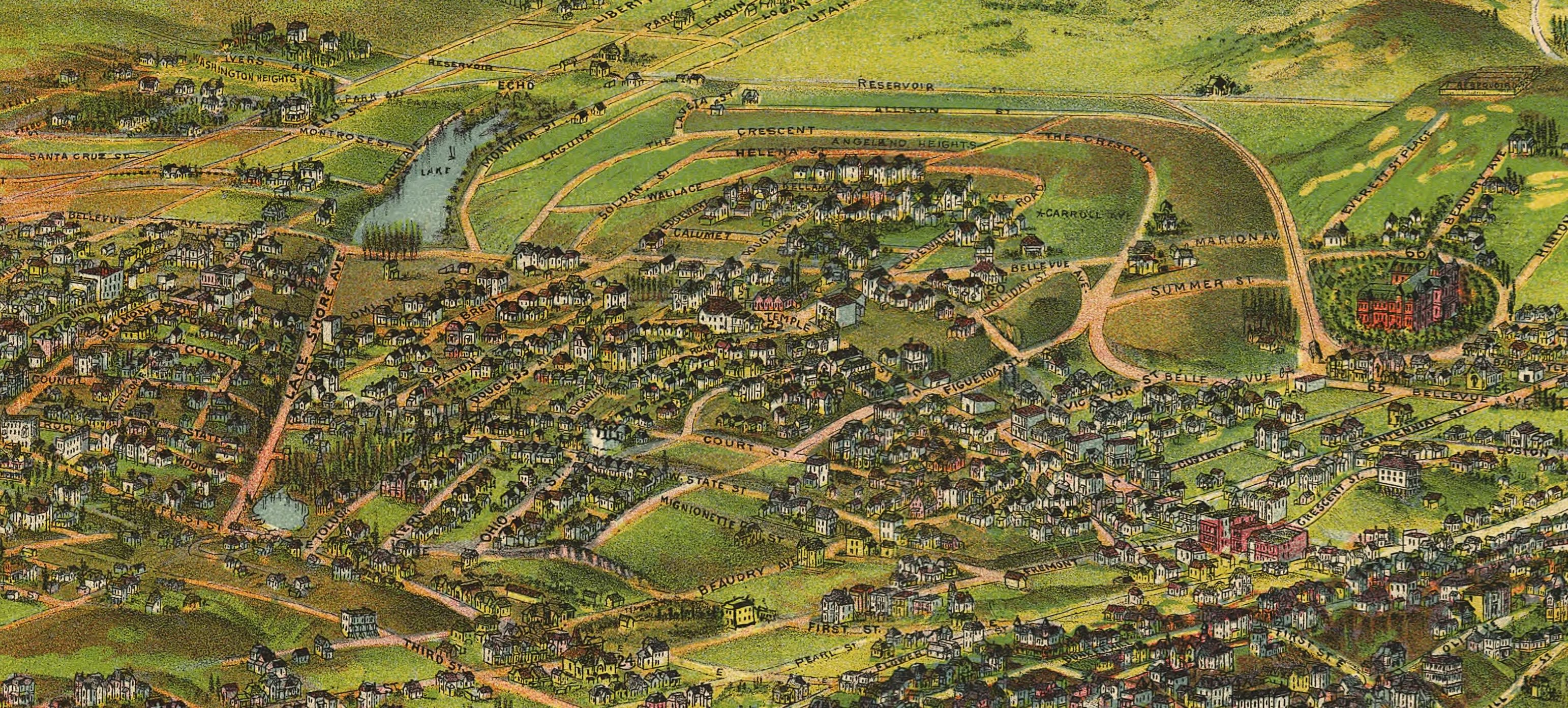
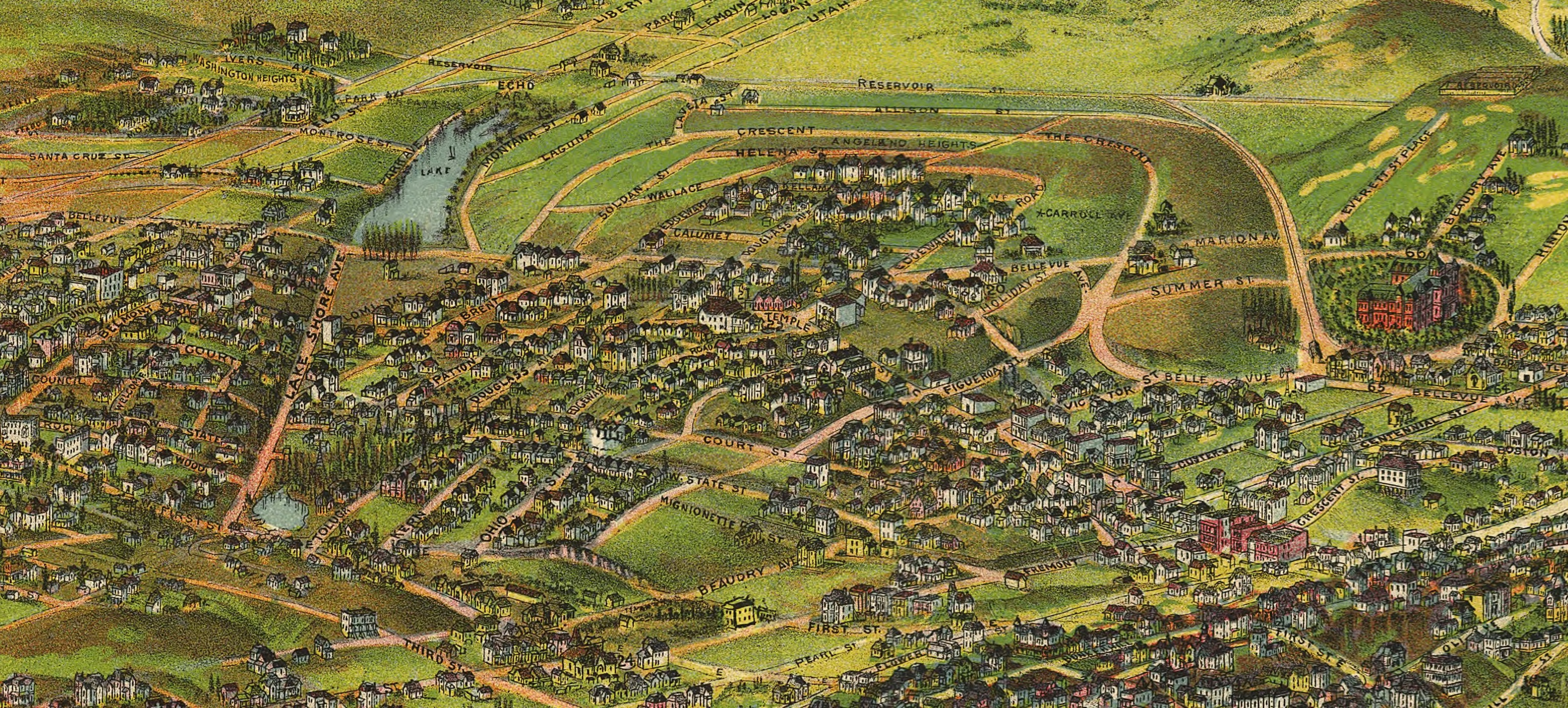
That is why names like Prudent Beaudry matter in the story. Beaudry was a major early Los Angeles real estate figure and former mayor whose landholdings and development work helped shape areas around Bunker Hill, Temple Street, Bellevue Road and the hills near Echo Park and Angelino Heights.
The old map tells the story visually. You can see the way development crawled up the hills from Downtown, following roads, streetcar lines and available land. Echo Park was not some isolated bohemian village. It was part of the city’s first major westward expansion.
And from the beginning, it had what LA buyers still pay for today: topography.
Hills. Views. Character. Curving streets. Homes with a sense of place.
That is still the real estate appeal of Echo Park. It does not feel like a flat grid. It feels layered.
Echo Park Lake Became the Heart of the Neighborhood
Eventually, the former reservoir became the public park and lake that most people associate with Echo Park today. The park was dedicated and opened to the public in the 1890s, and over time it became one of the city’s great gathering places.
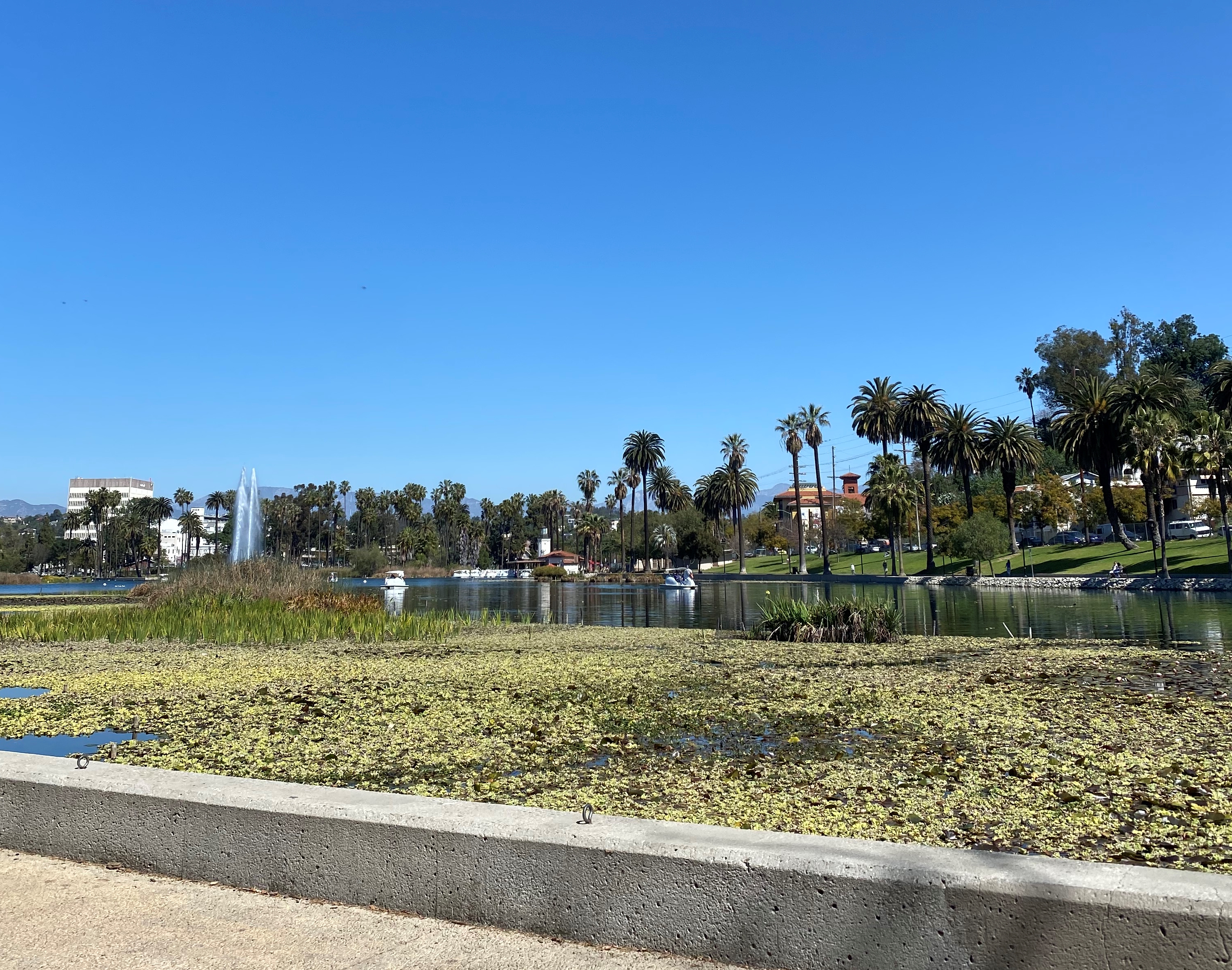
Today, Echo Park Lake is almost too photogenic for its own good.
You have the fountain, the lotus beds, the palm trees, the pedal boats, the downtown skyline, the walking path and that unmistakable feeling of old Los Angeles. It is one of the few places in the city where you can stand in a public park and feel the layers of LA all at once: Victorian-era development, immigrant communities, civic neglect, restoration, protest, gentrification and Instagram-friendly beauty all sharing the same frame.
The lake went through a major rehabilitation from 2011 to 2013, including restoration of the lotus beds and improvements to the park. The City of Los Angeles notes that the Lotus Festival has been celebrated there for over four decades, and that new lotus beds were planted as part of the 2011–2013 restoration.
That is the thing about Echo Park. Even the pretty parts have history underneath them.
Before Hollywood, There Was Edendale
One of my favorite parts of Echo Park history is that before Hollywood became “Hollywood,” the area around Echo Park and Silver Lake was one of the centers of early West Coast filmmaking.
The district was known as Edendale, and by the 1910s several film studios were operating around Allesandro Avenue, now Glendale Boulevard. These included Selig Polyscope, Mack Sennett’s Keystone Studios, Pathé’s West Coast studio and others.
This is where the story gets wild.
Before LA’s movie mythology migrated deeper into Hollywood, Echo Park and its surrounding streets were already part of the silent film machine. Mack Sennett, Keystone, comedy shorts, early studio lots, streetcar access and cheap land all helped make the area a serious early film hub. Some accounts even describe Edendale as the center of filmmaking on the West Coast before Hollywood fully took over.
So when people talk about Echo Park as some recently discovered “cool” neighborhood, that is only part of the story.
Echo Park has been cool for more than a century.
It just keeps changing what kind of cool it is.
Streetcars, Hillsides and Working-Class LA
Echo Park also became desirable because it was close to Downtown but still residential. In early Los Angeles, streetcar access was everything. If you could get to and from work, but live in a quieter hillside neighborhood, that was valuable.
That basic equation still exists.
Today, Echo Park is still prized because it is close to Downtown, Silver Lake, Los Feliz, Elysian Park, Dodger Stadium and the 101, while still offering actual neighborhood character. You can have a hillside house, a Craftsman, a Spanish bungalow, a Victorian, a duplex, an apartment, a modern infill project or a small compound tucked into the hills.
That mix is the charm.
It is also the tension.
Echo Park has always had different versions of LA layered on top of each other. Old houses and new money. Renters and owners. Artists and families. Longtime Latino residents and newer buyers. Beautiful homes next to dense apartment buildings. Public parkland next to private hillside properties.
That friction is part of why the neighborhood feels alive.
The Gentrification Story Is Impossible to Ignore
You cannot talk honestly about Echo Park without talking about gentrification.
For decades, Echo Park was more working-class, more immigrant, more affordable and more stigmatized than it is today. Then the market changed. Buyers who were priced out of the Westside or wanted something more urban began moving in. Restaurants, bars, coffee shops and creative businesses followed. Home values rose. Longtime residents felt pressure. And Echo Park became one of the central neighborhoods in LA’s ongoing conversation about displacement.
That shift has been widely covered, especially around the lake and the neighborhood’s changing identity. The LA Times has described Echo Park as a place where rising land values, supply constraints, redlining history and gentrification pressures collided, while UCLA researchers have examined displacement connected to Echo Park Lake and the broader housing crisis.
This is where I think people get LA neighborhoods wrong.
They want to make them either good or bad. Either “cool” or “ruined.” Either “up-and-coming” or “gentrified.” But Echo Park is more complicated than that.
It is a neighborhood where reinvestment brought real amenities and attention, but also real loss. It is a place where beautiful architecture was preserved in some cases, while community continuity was disrupted in others. It is both one of the most desirable neighborhoods in Central LA and one of the clearest examples of how desirability can become a problem for the people who made a neighborhood feel special in the first place.
Why Buyers Still Love Echo Park
From a real estate perspective, Echo Park works because it has what many LA buyers say they want but cannot easily find.
It has proximity. It has character. It has walkable pockets. It has hillside views. It has old homes with soul. It has restaurants, coffee, nightlife, park access and a sense of neighborhood identity. It is close to Downtown without feeling like Downtown. It is close to Silver Lake without always carrying the same price premium. And it has a grittier, more layered energy than some of LA’s more polished neighborhoods.
For buyers, the appeal is obvious.
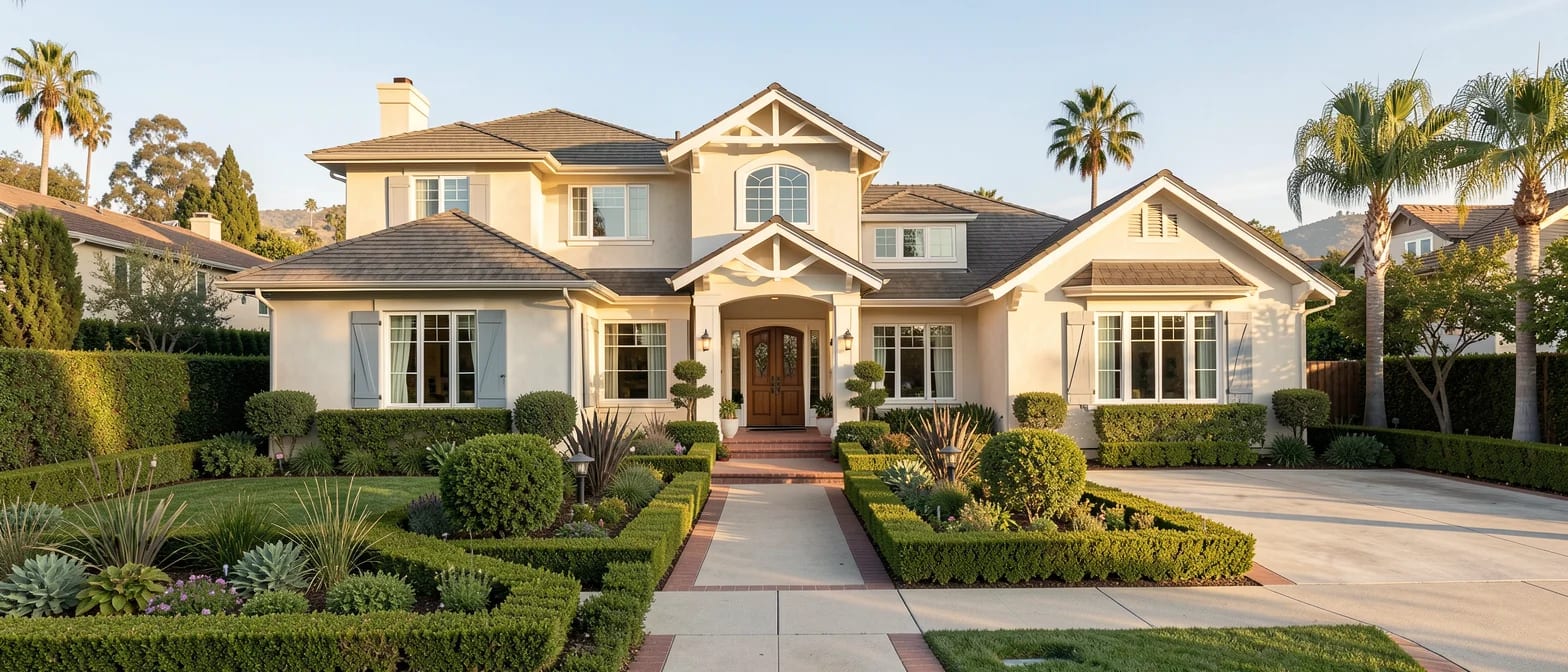
A hillside Craftsman with views. A Spanish bungalow with original details. A duplex with income potential. A small compound. A restored Victorian. A modern architectural home tucked into the slope.
These are not cookie-cutter properties. Echo Park homes often have personality.
But personality also means due diligence.
Many homes are old. Lots can be steep. Parking can be tight. Some properties have older systems, nonconforming additions, hillside drainage concerns or complicated access. You need to look carefully at permits, foundations, retaining walls, sewer lines, roof condition, electrical, insurance and whether the property functions as well as it photographs.
In Echo Park, charm can be real.
So can deferred maintenance.
What Sellers Need to Understand
For sellers, Echo Park has a strong buyer pool, but presentation matters.
The best Echo Park listings do not just sell square footage. They sell a story. They sell proximity to the lake, hillside privacy, architectural character, views, outdoor space, walkability and the feeling of being in one of LA’s most culturally recognizable neighborhoods.
But buyers here are also sophisticated. They know the difference between original character and outdated condition. They know when a house has soul and when it is just being marketed as “bohemian.” They know when a view is special, when parking is a problem, and when a hillside inspection could change the entire deal.
That is why pricing has to be smart.
Echo Park can command strong numbers, but only when the property’s story, condition and location all line up.
My Take
Echo Park is one of LA’s best neighborhood stories because it refuses to be simple.
It started as a reservoir. It became a park. It helped support early hillside real estate development. It played a role in silent film history before Hollywood took over. It became a working-class neighborhood. It became a center of culture, music, food and creative energy. Then it became expensive, controversial and desirable.
That is Los Angeles in miniature.
The beauty of Echo Park is not that it is perfect. It is that it shows you the whole city: ambition, reinvention, displacement, creativity, architecture, public space and the constant fight over who gets to belong.
If you are thinking about buying or selling in Echo Park, you need more than a Zestimate and a few comps. You need to understand the street, the slope, the house, the history and the buyer psychology behind the market.
If you are considering a move in Echo Park or anywhere on LA’s Eastside and Central neighborhoods, contact me, Tyler Neale. Partnering with Tyler Neale Real Estate can help you understand not just what a property is worth, but what makes it matter.