
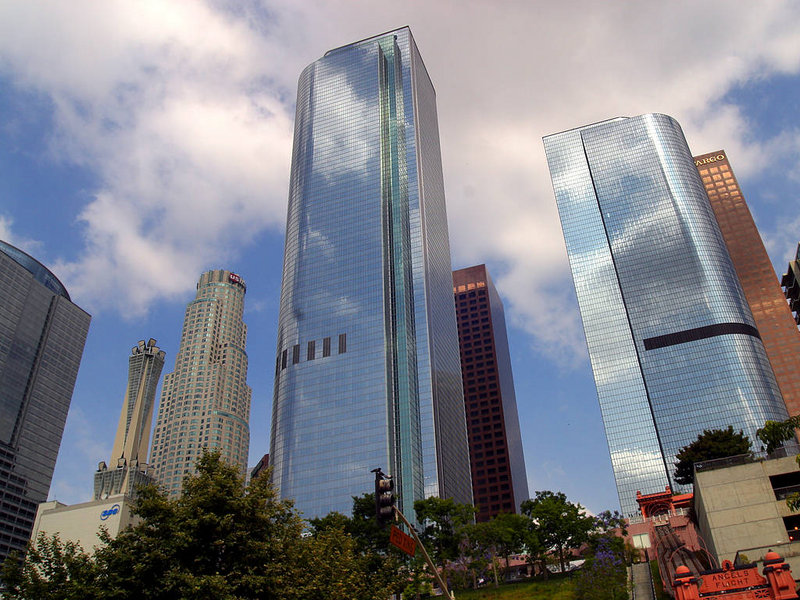
Downtown Los Angeles has always been the place where LA tries to decide what kind of city it wants to be.
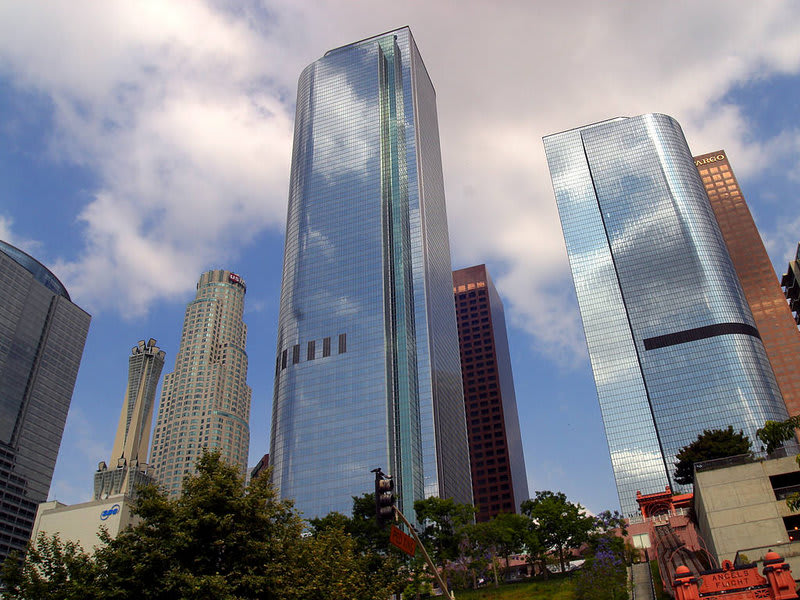
It is the birthplace of Los Angeles, the historic business center, the civic center, the transit hub, the old theater district, the high-rise office core, the Arts District, Skid Row, the Convention Center, the Financial District, and one of the most complicated real estate stories in Southern California.
So when people ask whether Downtown LA can revive before the 2028 Olympics, my answer is yes, but not automatically.
The Olympics may bring pressure, attention, investment, security upgrades, transit focus, and urgency. But the Olympics alone will not fix Downtown. DTLA has been reinvented several times before, and every comeback has depended on something deeper than a single event.
It has depended on whether people actually want to live, work, walk, eat, shop, and spend time there.
That is the real question for Downtown Los Angeles.
Downtown Is Where Los Angeles Began
Before Los Angeles became a region of suburbs, studios, beaches, freeways, and hillside estates, it began as a small pueblo near what is now El Pueblo de Los Angeles Historical Monument. The city was founded in 1781 by 44 settlers of Native American, African, and European heritage who established a farming community under Spanish rule. (City of Los Angeles)
That matters because DTLA is not just another neighborhood. It is the original center of the city.
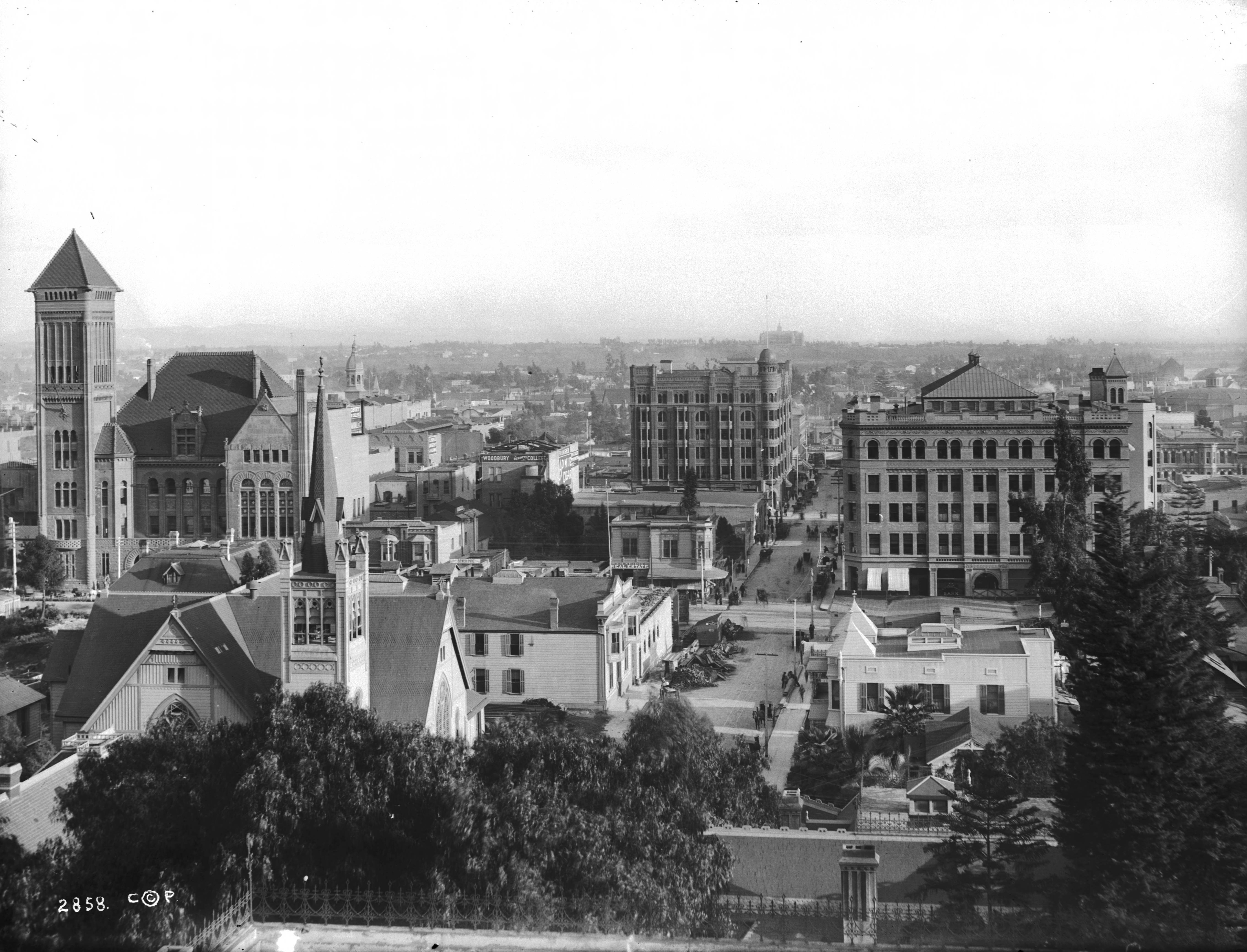
As Los Angeles grew in the late 1800s and early 1900s, Downtown became the place where the city's ambitions were most visible. Banks, hotels, department stores, churches, theaters, office buildings, streetcars, and government buildings all concentrated there. This was the Los Angeles people came to before Hollywood, Beverly Hills, and the Westside became internationally famous.
Today, when people think of LA, they often think of sprawl. But the early city was much more centered. Downtown was where business happened, where entertainment happened, and where civic power gathered.
That history still matters in real estate. A neighborhood with this much infrastructure, architecture, and cultural memory is never just a blank slate. Even when Downtown struggles, it is struggling on land that has already proven its importance for more than two centuries.
The City Once Moved Through Downtown
One of the most fascinating things about old Downtown is how urban it used to feel.
Streetcars, pedestrian traffic, hotels, theaters, and steep hillside neighborhoods all connected through a dense city center. Angels Flight, which first opened in 1901, carried riders up and down Bunker Hill and became one of Downtown's most recognizable landmarks. The Broadway Theater District later became one of the greatest concentrations of historic movie palaces in the country, with LA Conservancy noting that before there was Hollywood, there was Broadway. (LA Conservancy)
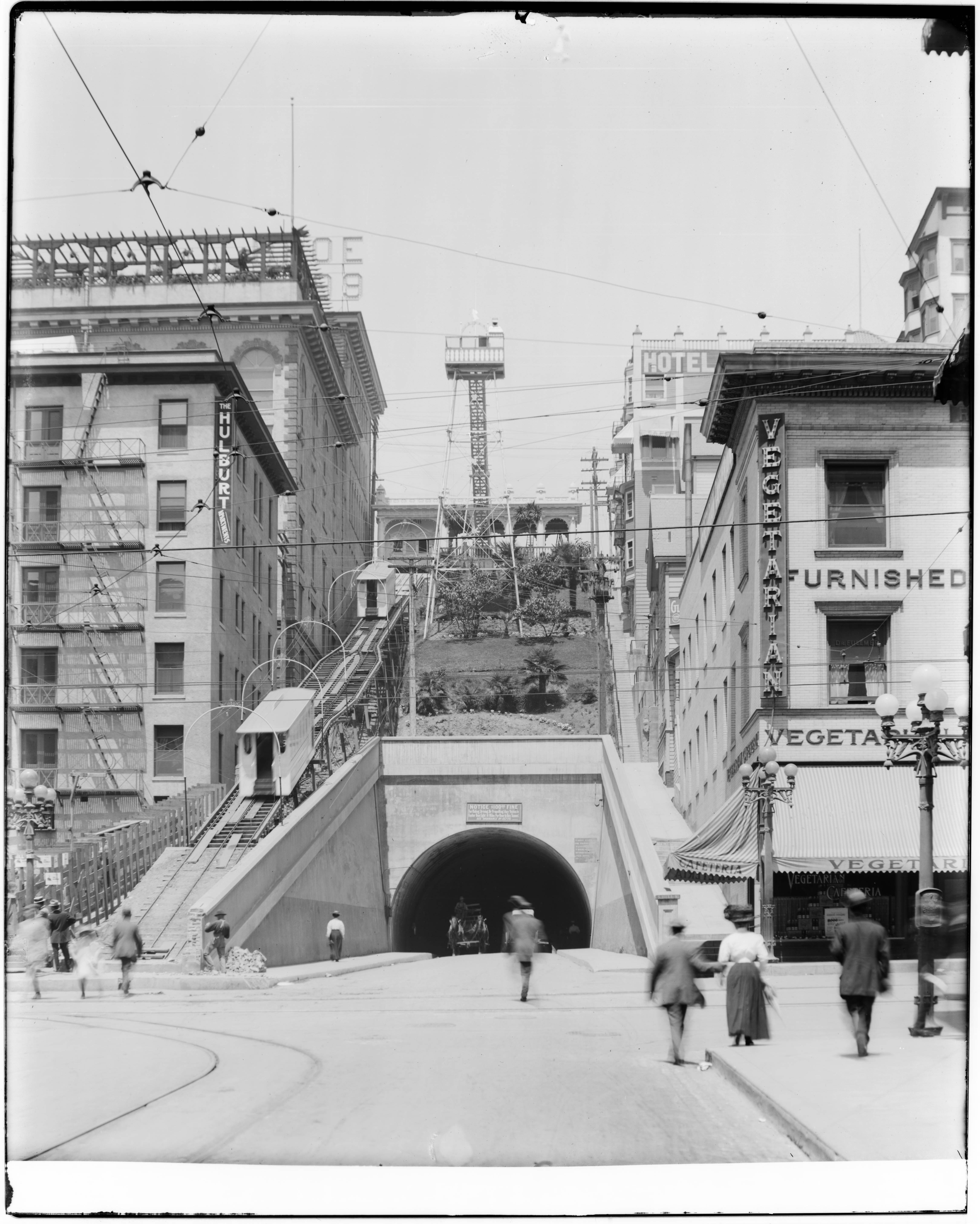
This is one of the reasons I think Downtown still has so much potential. It was designed around movement, density, and proximity long before Los Angeles became defined by car culture.
You can still feel that older city hiding underneath the modern one. You see it in the historic buildings on Broadway. You see it in the old banks and office towers that became lofts. You see it in the way districts like the Historic Core, Arts District, Little Tokyo, South Park, Bunker Hill, and the Financial District all sit close to each other but feel completely different.
Downtown has the bones of a real city. The challenge is whether Los Angeles can make those bones work again.
Downtown Was Also Remade by Destruction
The story of DTLA is not just about preservation. It is also about demolition.
Bunker Hill is the clearest example. Once a residential neighborhood filled with Victorian homes and boarding houses, Bunker Hill was targeted for urban renewal in the mid-twentieth century. The Bunker Hill Urban Renewal Project was adopted in 1959, and the area became one of the longest and most consequential redevelopment pathways in the metropolitan basin.
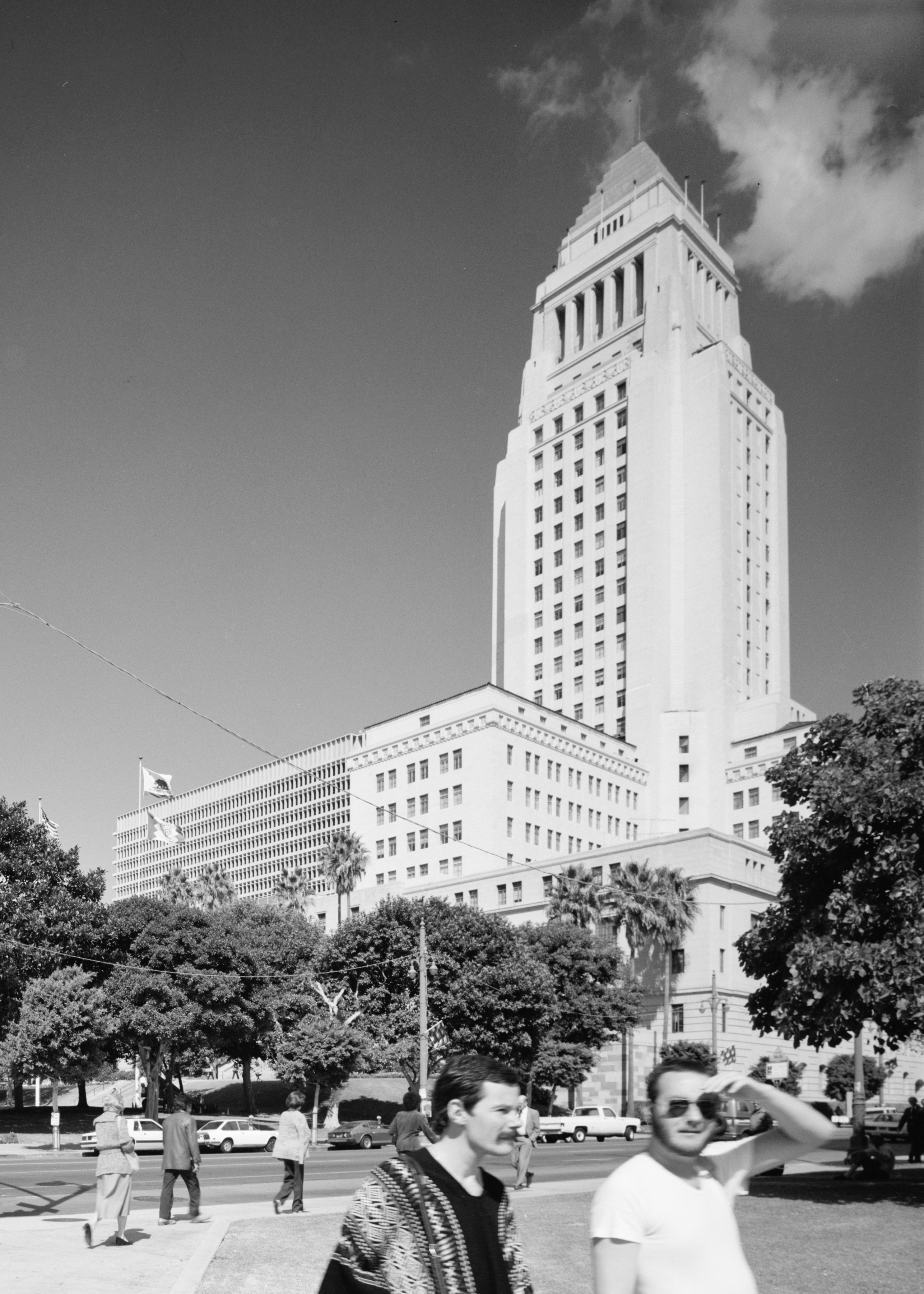
The official reasoning was that Bunker Hill had become overcrowded, aging, and blighted. But the result was still enormous displacement and the near-total erasure of one of Downtown's most distinctive historic neighborhoods. In its place came office towers, cultural institutions, plazas, and a very different kind of city.
This is where I think people often misunderstand Downtown. Its current condition is not an accident. DTLA was shaped by public policy, redevelopment, freeway construction, office migration, suburbanization, policing, homelessness policy, and decades of decisions that prioritized some uses over others.
That is why a real comeback cannot simply mean cleaning up a few storefronts before the Olympics. It has to mean understanding why Downtown became fragmented in the first place.
Freeways Changed the Center of the City
Los Angeles did not just grow outward. It was engineered outward.
As freeways expanded after World War II, they made it easier for people and businesses to leave the urban core. Suburban shopping centers, office parks, and residential neighborhoods pulled energy away from Downtown. The same freeway system that connected the region also cut through older neighborhoods and reinforced the idea that the center of Los Angeles was something to pass through rather than live in.
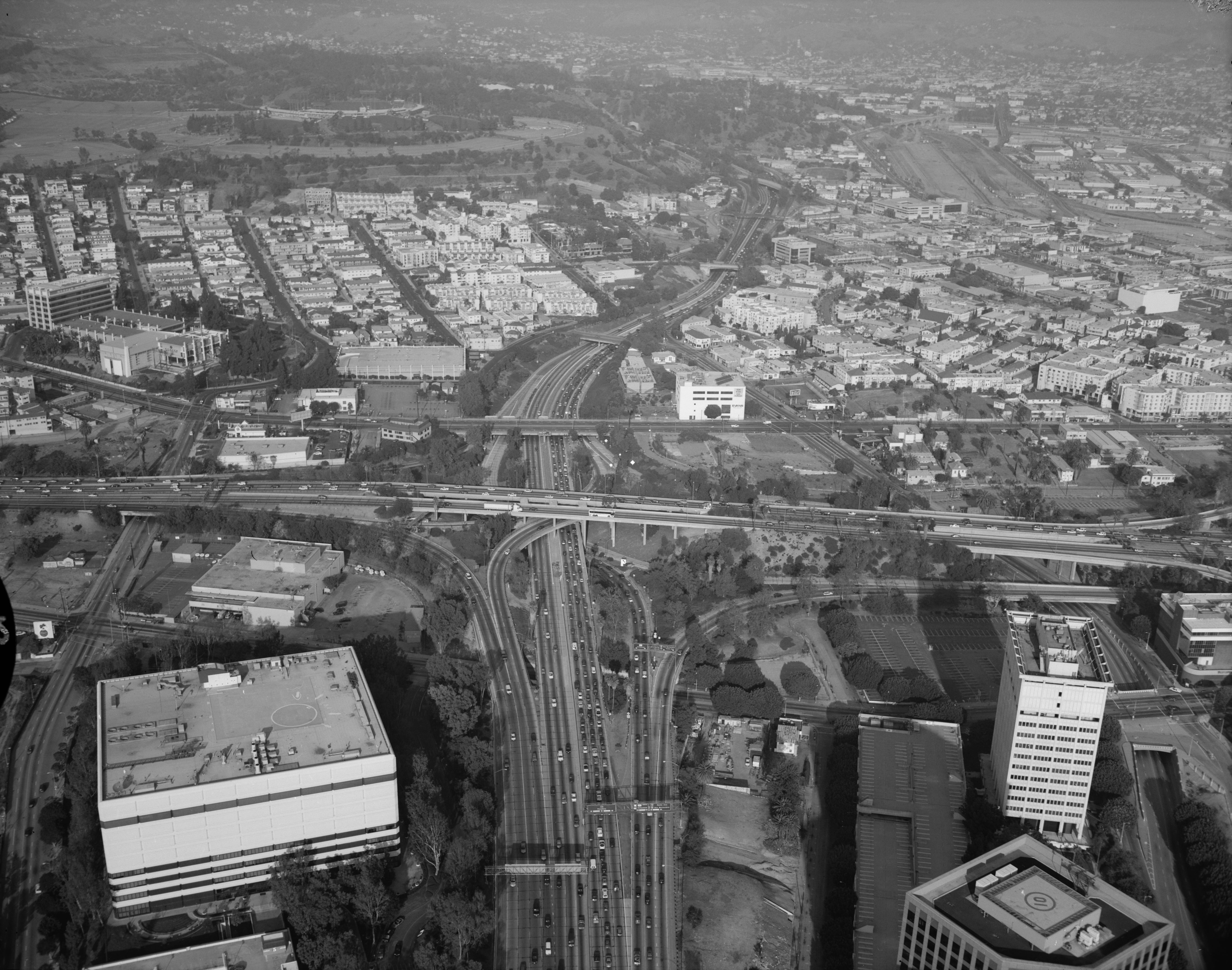
By the late twentieth century, Downtown had become many things at once: a government center, a corporate office market, a wholesale district, a homeless services hub, and a place with beautiful historic buildings that were often underused.
Skid Row became one of the most visible examples of Downtown's unresolved social crisis. LA County has described Skid Row as roughly 50 square blocks with the densest concentration of people experiencing homelessness in the county.
That reality cannot be separated from any serious conversation about DTLA's future. People want a cleaner, safer, more functional Downtown. But the solution cannot just be cosmetic. If the city wants Downtown to succeed long term, it has to address housing, services, public safety, mental health, addiction, street conditions, and business confidence in a coordinated way.
The Downtown Renaissance Was Real
Downtown did make a major comeback once before.
In 1999, Los Angeles adopted the Adaptive Reuse Ordinance, which made it easier to convert older, underused office and commercial buildings into housing, hotels, and new uses. LA City Planning notes that the original ordinance applied to older buildings in or near Downtown, and the LA Conservancy credits adaptive reuse with helping create more than 12,000 housing units Downtown.
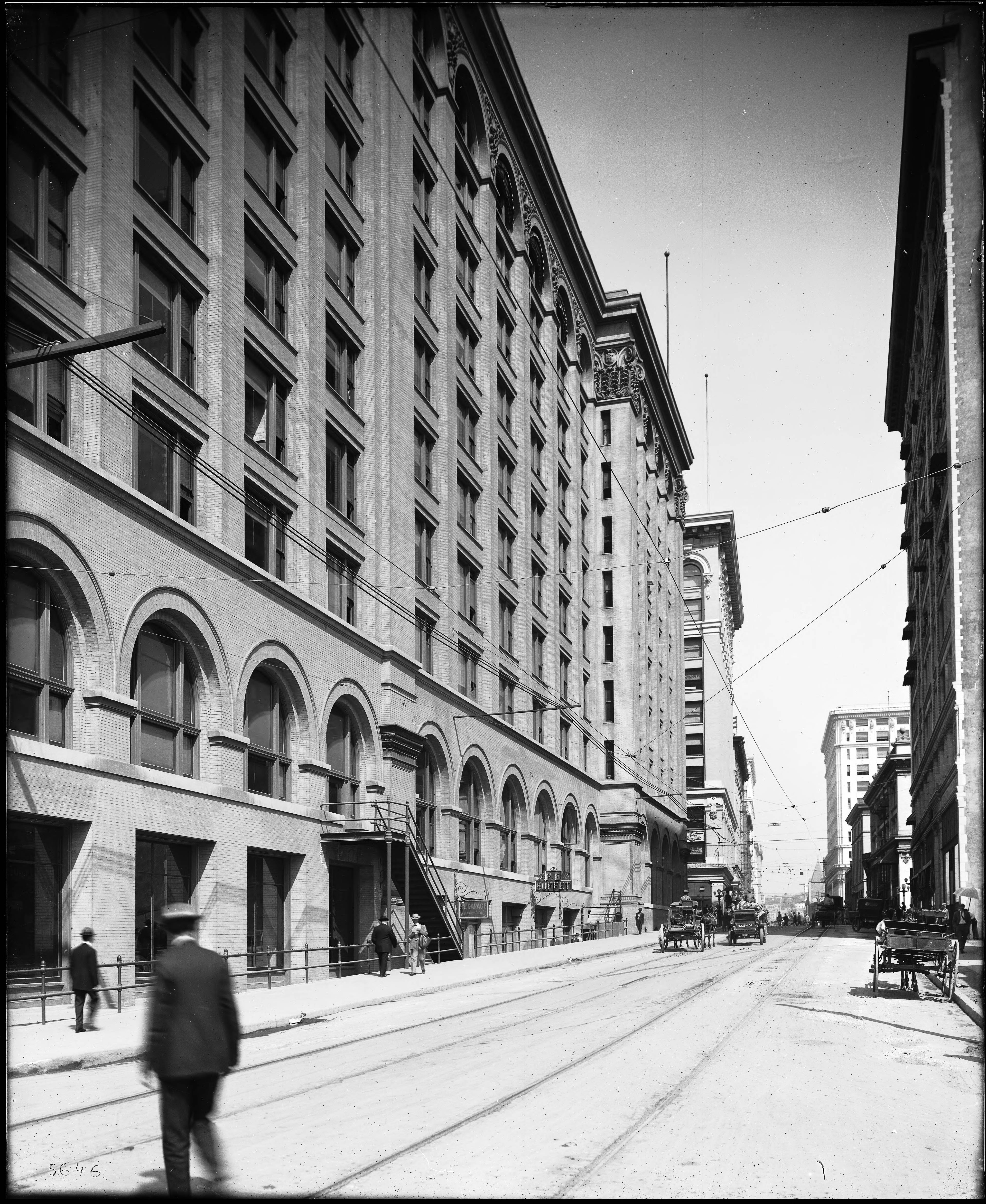
That ordinance changed the trajectory of DTLA. Old banks, office buildings, department stores, and industrial spaces became lofts, apartments, hotels, restaurants, and creative offices.
By the 2000s and 2010s, Downtown had real momentum. New residents moved in. Restaurants opened. The Arts District exploded. South Park grew around LA Live and the Convention Center. Historic Core buildings were brought back to life. Grand Central Market became a symbol of the new Downtown food scene. The Broad, Walt Disney Concert Hall, and Grand Park strengthened the cultural corridor.
For a while, DTLA felt like one of the clearest arguments that Los Angeles could become more urban, walkable, and residential. Compared to established coastal footprints highlighted in our guide to living in Santa Monica, this renaissance marked a total departure from traditional suburban sprawl.
That comeback was not hype. It was real.
Then Downtown Got Hit Hard
The problem is that Downtown was especially vulnerable to the post-pandemic shift.
Remote work hurt office districts everywhere, but Downtown LA was hit hard because so much of its daily life depended on office workers, government workers, conventions, events, and visitors. Colliers reported that Downtown office vacancy remained at 32.4 percent in the first quarter of 2026, showing how much office space is still available even as some market conditions have stabilized. (Colliers)
Retail struggled. Some restaurants closed. Storefronts were boarded up. Concerns about homelessness, public safety, graffiti, and street conditions became central to the way many Angelenos talked about Downtown.
The graffiti-covered Oceanwide Plaza towers became the most visible symbol of that frustration. A stalled development across from Crypto.com Arena turned into a national image of Downtown's problems. In 2026, reporting indicated the project had finally found a buyer, with new plans to invest heavily and complete the development before the 2028 Olympics. (The Wall Street Journal)
That matters because Downtown's biggest challenge right now is not that it lacks assets. It is that its problems have become more visible than its strengths.
Can the Olympics Help?
The 2028 Olympics will not save Downtown by themselves.
But they can create a deadline.
That deadline matters. LA28's official venue plan includes Downtown area venues such as the Los Angeles Convention Center, Peacock Theater, and DTLA Arena, which means Downtown will be part of the global Olympic experience. (LA28)
The Olympics can push improvements in transit, security, wayfinding, event planning, public spaces, hospitality, and unfinished developments. They can give businesses a reason to reopen, investors a reason to pay attention, and the city a reason to coordinate faster than it normally does. This type of high-density infrastructure deadline carries massive implications for surrounding regions, much like the mixed-use stadium transitions shifting property values in our overview on living in Inglewood.
But the danger is thinking that visitors alone equal revival.
A real DTLA comeback has to work after the Olympics leave. It has to work on a Tuesday morning, not just during a global event. It has to be livable for residents, attractive for employers, functional for tourists, safer for pedestrians, and humane for people experiencing homelessness.
My take is that the Olympics can accelerate a Downtown revival, but they cannot substitute for one.
What DTLA Buyers Are Really Waiting For
For many buyers, the question is not whether Downtown is interesting. It obviously is.
The question is whether it feels stable enough to buy into right now.
Higher interest rates have already made affordability more difficult across Los Angeles. Freddie Mac reported the average 30-year fixed mortgage rate at 6.49 percent as of July 9, 2026, which is high enough to keep many buyers cautious. (Freddie Mac)
In DTLA, that caution is amplified by neighborhood perception. Buyers are asking whether the building is well managed, whether the HOA is healthy, whether the block feels safe, whether retail is coming back, whether office vacancy will keep dragging on the area, and whether the Olympics will create real momentum or just a temporary cleanup.
Those are fair questions.
But DTLA also offers something that many other LA neighborhoods do not: a large supply of condos and lofts, historic architecture, transit access, walkability, cultural institutions, restaurants, and the possibility of buying into a neighborhood before its next wave of improvement is fully priced in. For buyers balancing internal urban parameters against macro-market indicators, keeping tabs on our master Los Angeles Real Estate Blog hub provides crucial ongoing context.
That does not mean every Downtown property is a good buy. It means buyers need to be extremely specific.
A loft in the Historic Core, a condo in South Park, a luxury unit near Bunker Hill, and a warehouse conversion in the Arts District are not the same product. They attract different buyers, have different financing considerations, different HOA risks, and different long-term value drivers.
For sellers, the strategy also has to be specific. In a higher-rate market, buyers need a clear reason to choose one property over another. In DTLA, that reason might be a protected view, parking, building amenities, historic character, proximity to restaurants, walkability, or a strong HOA.
The days of simply listing a Downtown condo and assuming demand will appear are over. Presentation, pricing, building story, and neighborhood context matter.
The Real Estate Takeaway
Downtown Los Angeles is not dead. It is unsettled.
That is different.
A dead neighborhood has lost its reason to exist. DTLA has not. It still has the history, the transit, the architecture, the cultural institutions, the civic center, the entertainment venues, the residential base, and the land-use logic to matter. Navigating an unsettled landscape requires looking past the surface—similar to the hidden micro-location frameworks we outline when exploring the challenges of buying land in Malibu.
The issue is whether Los Angeles can make Downtown feel like a complete city again.
That means addressing safety without erasing humanity. It means filling vacant storefronts. It means converting obsolete office space where possible. It means supporting restaurants and small businesses. It means making public spaces feel usable. It means treating Downtown not just as an office district, but as a real neighborhood.
The Olympics may be the spark. But the real test will come after the world stops watching.
If Downtown can use this moment to become cleaner, safer, more residential, more walkable, and more functional, then DTLA may not just revive before the Olympics. It may finally become the urban center Los Angeles has been trying to build for more than a century.
If you are considering buying or selling in Downtown Los Angeles, or anywhere else in LA, read more about my practice or contact me, Tyler Neale directly. I can help you understand not just the property, but the history, market conditions, building quality, and neighborhood trajectory that determine long-term value.