
Hollywood has no shortage of hidden streets, staircases, strange houses and old movie-town secrets.
But Hollywood Tower Court feels different.
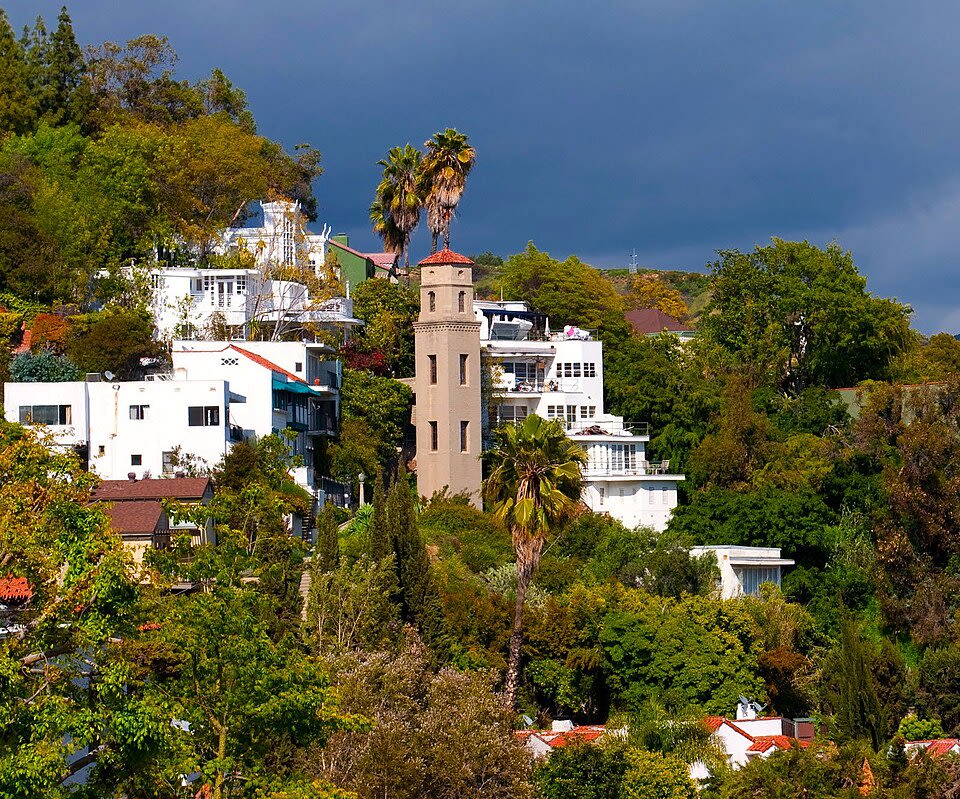
Tucked into the hills above the Hollywood Bowl, this little pocket of Hollywood Heights feels less like a normal Los Angeles street and more like a secret village built into the side of a canyon. In my Hollywood Tower Court reel, I focused on what makes this place so unusual: the tower, the hillside homes, the old Hollywood setting, and the way this neighborhood still feels almost impossible to stumble into by accident.
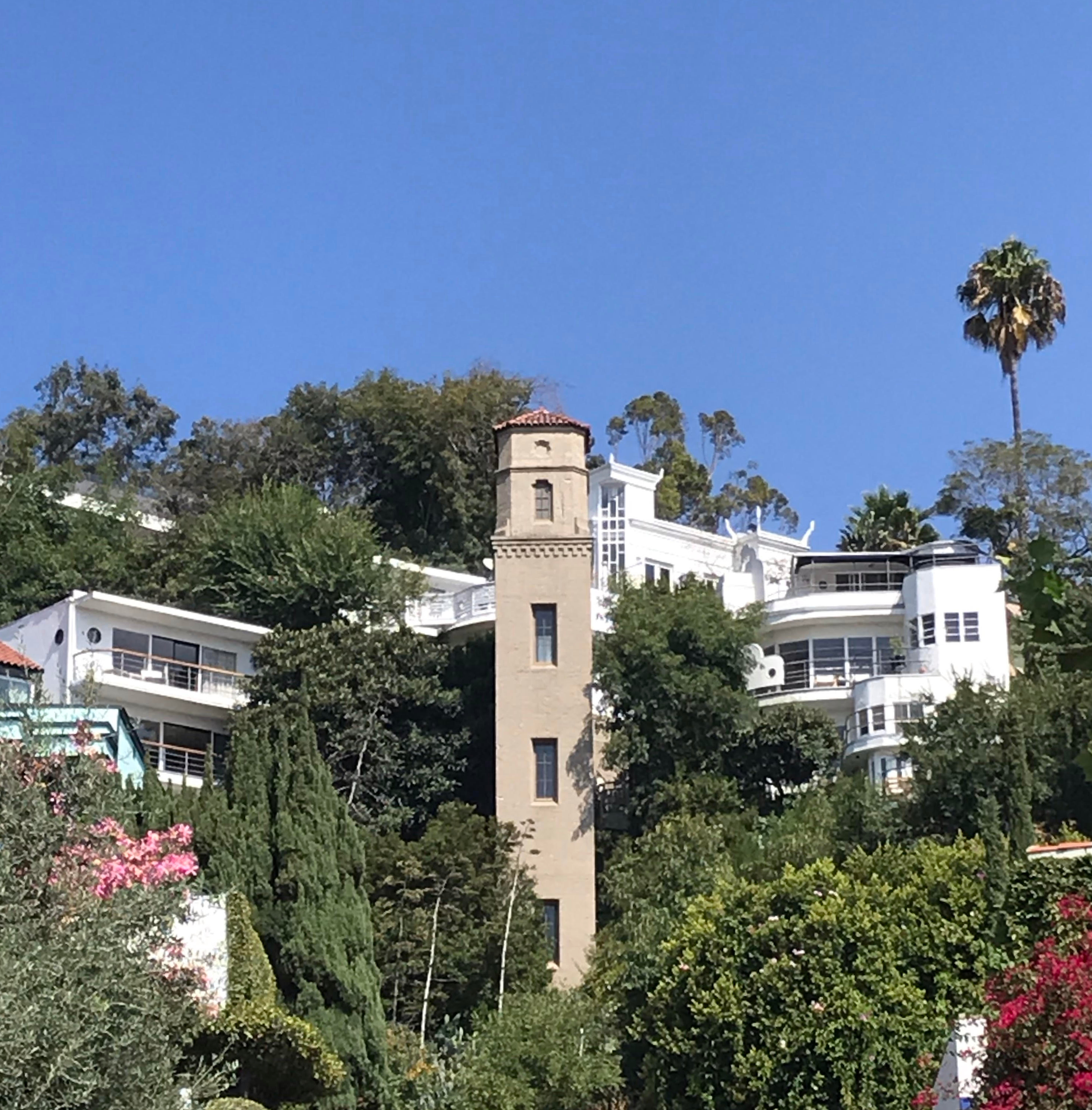
The centerpiece is High Tower, a private elevator tower built into the hillside near High Tower Drive. It looks like an old European campanile, but it is not decorative. It was built to move residents up and down the hill. The tower is often described as a five-story, roughly 100-foot-high private elevator, designed in the style of a Bolognese campanile.
That is the kind of thing that could only happen in Los Angeles.
A private elevator tower. A cluster of hillside homes. A major entertainment landmark next door. And somehow, it is all hidden in plain sight.
A Neighborhood Built for the Hillside
Hollywood Tower Court sits within Hollywood Heights, one of those rare LA neighborhoods where the terrain shapes everything.
The streets twist. The lots are irregular. Some homes feel like they are stacked into the hill. Others are tucked behind stairways, retaining walls, trees and narrow lanes. It does not have the clean, gridded feeling of the flatlands below. It feels older, more eccentric, and much more connected to the original topography of Hollywood.
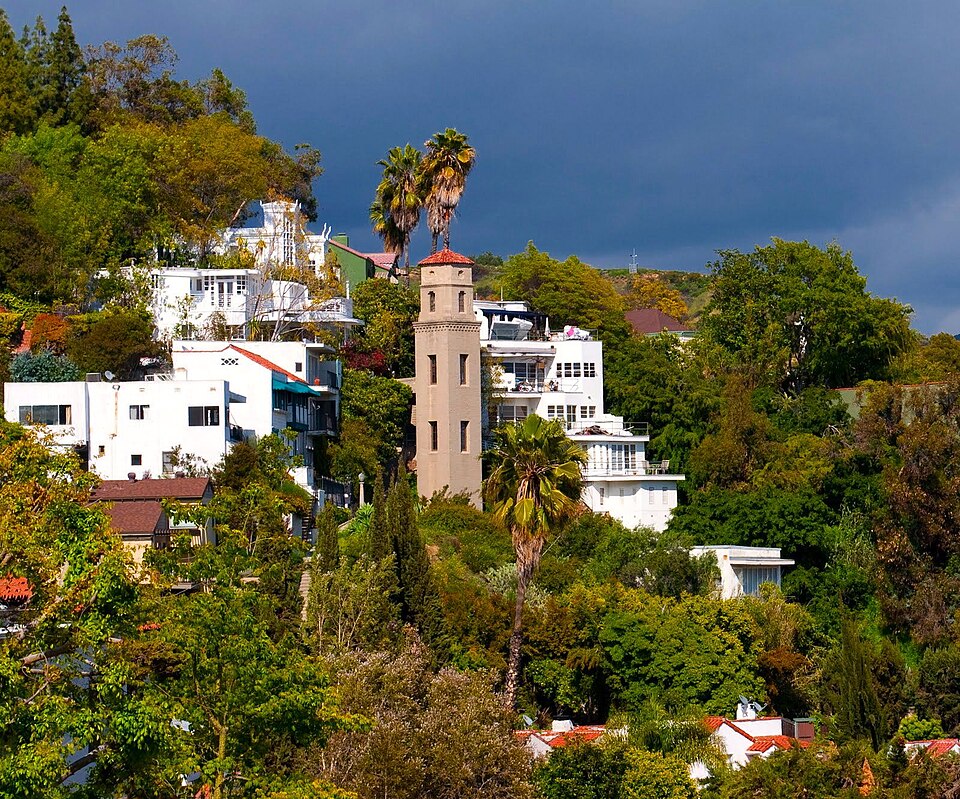
That geography is a huge part of the charm.
This is not Beverly Hills luxury. It is not Bel Air scale. It is not the Bird Streets version of glass-box glamour. Hollywood Tower Court is more intimate and more cinematic. It has staircases, old apartment courts, hillside views, and architecture that feels like it belongs in a black-and-white film.
The homes here are not just valuable because of size. They are valuable because of scarcity, character and setting.
The Hollywood Bowl Changed Everything
One of the reasons this pocket matters is because of its relationship to the Hollywood Bowl.
The Bowl officially opened its first season on July 11, 1922, and quickly became one of the defining cultural landmarks of Los Angeles. Before it became the polished venue we know today, it was much simpler: hillside seating, a natural amphitheater and a stage set into the canyon.
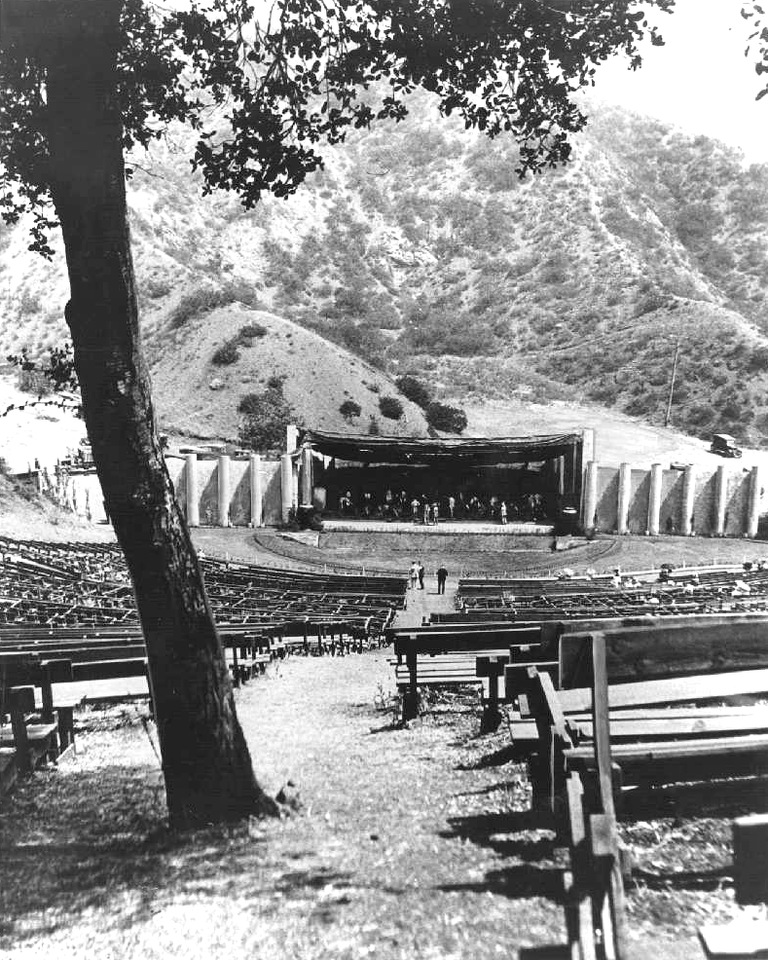
That is important because Hollywood Tower Court and Hollywood Heights grew up next to one of the most important entertainment spaces in the city.
This area was never just residential. It was surrounded by the energy of early Hollywood: studios, theaters, musicians, actors, tourists, architects and dreamers all moving through the hills. The Bowl gave the neighborhood a dramatic backdrop, but the hillside homes gave it privacy.
That tension is what makes the area so interesting.
You are close to Hollywood Boulevard, close to the Bowl, close to Highland, and close to the city’s entertainment history. But when you are tucked up in the hills, it can feel like you are in a totally separate world.
Old Hollywood at the Front Door
By the 1930s, the entrance to the Hollywood Bowl had already become one of the iconic gateways into LA’s entertainment landscape.
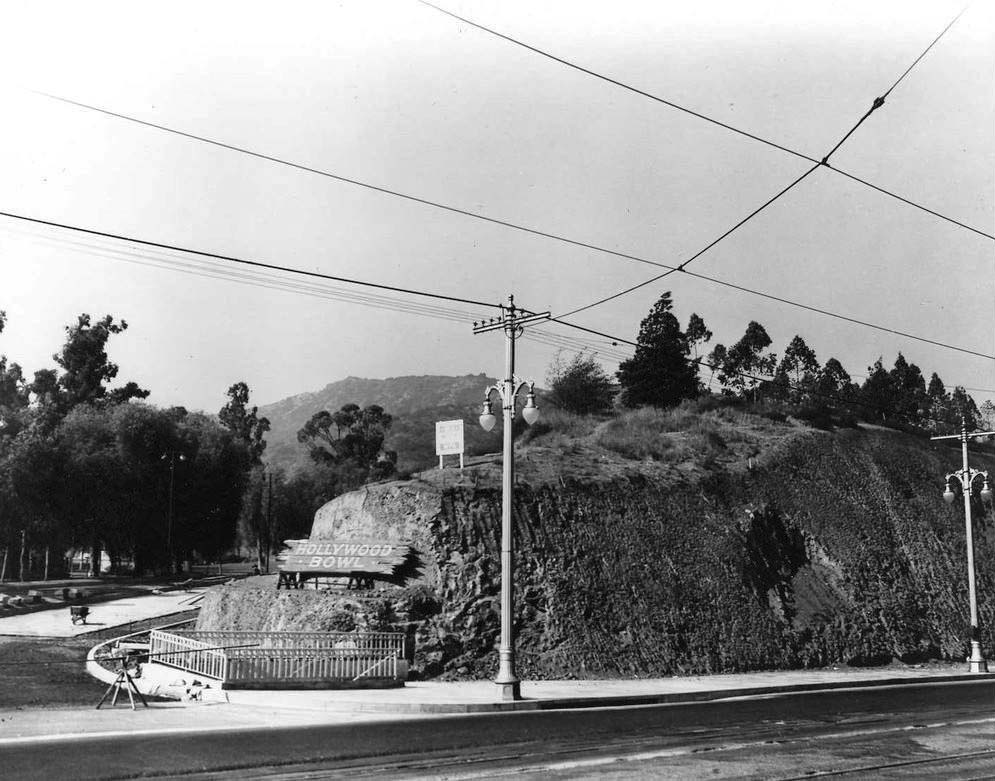
That matters for Hollywood Tower Court because this little hillside enclave was never isolated from Hollywood’s rise. It was perched directly above it.
Imagine living in one of these homes in the 1920s or 1930s. Below you, Hollywood is turning into the movie capital of the world. The Bowl is becoming a major cultural venue. The studios are growing. The nightlife is expanding. The mythology of Los Angeles is being built in real time.
And then, just up the hill, there is this strange tower and a cluster of homes that feel like they belong to a private club.
That is the appeal.
Hollywood Tower Court is not famous in the loud way. It is famous in the whispered way.
The Architecture Is the Story
What makes this pocket so compelling is the mix of architecture around it.
The area has Spanish, Streamline Moderne, Art Deco, hillside apartments, early modern homes, and some very serious architectural landmarks. One of the most important nearby examples is the Henry Bollman Residence, designed by Lloyd Wright.
The Bollman House was completed in 1923 and is considered one of Lloyd Wright’s early independent commissions, as well as an early experiment in textile-block design.
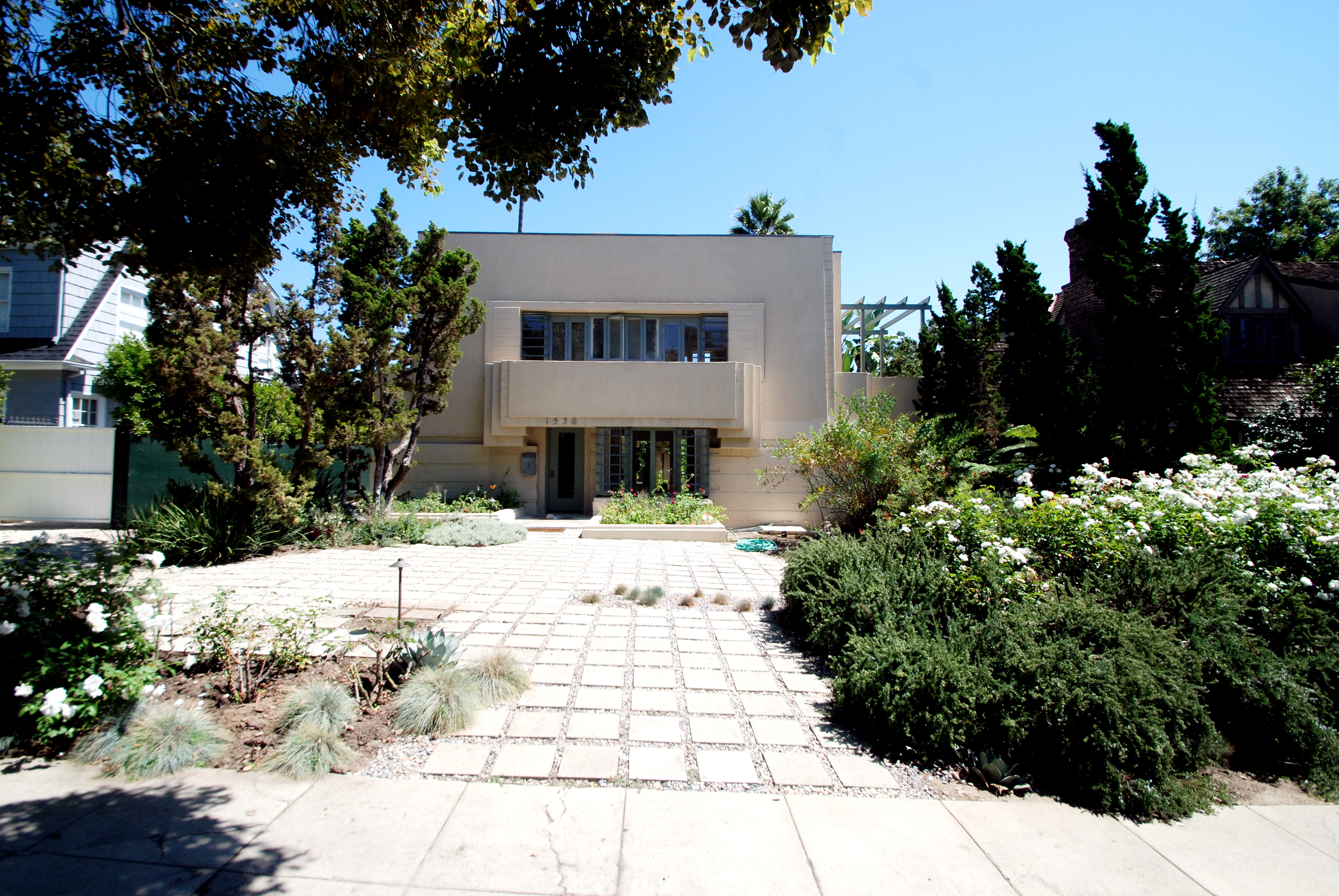
That architectural layer is what separates Hollywood Tower Court from a normal hillside neighborhood.
It is not just quirky. It is historically dense.
You have the Hollywood Bowl. You have High Tower. You have Lloyd Wright. You have steep hillside planning from a pre-car and early-car era of Los Angeles. You have homes that feel handmade for the landscape rather than dropped onto it.
This is one of the reasons architecture people love this part of Hollywood Hills real estate.
It still feels weird in the best possible way.
The Private Elevator Factor
The High Tower elevator is the feature everyone remembers.
Most LA neighborhoods are built around cars. This one has a private tower that helps residents access homes built above the street. That changes the way the whole place feels.
It makes the neighborhood feel vertical. It also gives it a sense of separation. Even if you are standing nearby, the homes above can feel just out of reach.
That is very LA.
A city famous for sprawl also has these tiny pockets where a few steps, a locked gate, or a private elevator can create an entirely different world.
In real estate terms, that is part of the value. Buyers are not just purchasing a house. They are buying into an experience: old Hollywood hillside living, architectural character, and a level of uniqueness that cannot really be replicated today.
What It Feels Like Today
Today, Hollywood Tower Court and the surrounding Hollywood Heights pocket still feel unusually protected.
You are minutes from Hollywood Boulevard, the Hollywood Bowl, the 101, Runyon Canyon, Franklin Village and Studio City access through the Cahuenga Pass. But the neighborhood itself does not feel like those places. It feels quieter, older and more residential.
That is why it appeals to a very specific kind of buyer.
This is not necessarily for someone who wants a massive flat lot, a giant garage and a brand-new trophy estate. It is for someone who values charm, architecture, walkability, views, history and a sense of place.
The tradeoff is that hillside living can be complicated. Parking can be limited. Access can be unusual. Some homes may have stairs, smaller garages, tight streets or quirky layouts. But for the right buyer, those are not dealbreakers. They are part of the story.
Why Hollywood Tower Court Still Matters
Hollywood Tower Court matters because it represents a version of Los Angeles that is getting harder to find.
It is not a master-planned luxury enclave. It is not a gated community. It is not a flattened, standardized neighborhood. It is a hillside pocket shaped by terrain, history and imagination.
That is exactly what makes it special.
The best LA neighborhoods are not always the most polished. Sometimes they are the places where the city’s layers are still visible: early Hollywood, hillside engineering, experimental architecture, entertainment history, and eccentric residential design all sitting on top of each other.
Hollywood Tower Court has all of that.
My Take
What I love about Hollywood Tower Court is that it feels like the kind of place that could only exist in Los Angeles.
A private elevator tower above the Hollywood Bowl. Lloyd Wright architecture nearby. Old hillside homes tucked into narrow streets. Views over Hollywood. The feeling that you are close to everything, but somehow hidden from it.
That is the magic.
It is not the most famous luxury address in LA. It is not the biggest. It is not the flashiest.
But it is one of the most character-filled.
And in a city where so much gets torn down, rebuilt and smoothed out, Hollywood Tower Court still feels like a piece of old LA that managed to survive.
If you are thinking about buying or selling in Hollywood Heights, the Hollywood Hills, Los Feliz, Outpost Estates or anywhere in the surrounding hillside neighborhoods, contact me, Tyler Neale. Partnering with Tyler Neale Real Estate can help you understand not just the comps, but the history, architecture and real value behind these one-of-a-kind LA pockets.